A RETROSPECTIVE REVIEW OF INDICATIONS AND COMPLICATIONS OF EXTREMITY AMPUTATIONS IN LAUTECH TEACHING HOSPITAL, OGBOMOSO, NIGERIA.
Formerly Published in Vol. 6 No. 2 Jul. - Dec., 2021
Keywords:
Amputation, traumaAbstract
Background: information Major amputations are not without their devastating post-operative omplications which may include hallenges with wound healing, wound infection, the disturbing phenomenon of phantom limb pain, and psychosocial problems to mention a few. It becomes imperative to find out the associated indications and complications.
Methodology: This is a retrospective hospital-based study of 75 unilateral extremity amputations done between 2018 and 2022 in LAUTECH Teaching Hospital, Ogbomoso, Oyo state. Case notes of the patients were retrieved from the hospital's Records department. Information about their sociodemographic characteristics, indications for amputation, the level of amputation, complications after surgery, and others were obtained from their records using a well- structured proforma.
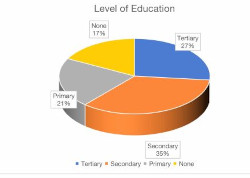
Result: The age of the patients ranged between 5 to 80 years and the mean age is 46.7 years. The majority in terms of education had secondary school certificates (34%). Also, out of Seventy-five (75) patients with unilateral amputations. 58 (77.3%) of them were male and 17(22.7%) were female with male to female ratio of 3.4: 1. In addition. 29(38.7%) and 28(37.3%) patients had below-knee amputations and above-knee amputations respectively. The most common indication for amputation is trauma i.e. 34.67% (26 patients) followed by diabetic foot gangrene seen in 17 (22.67%) patients. Traditional bone setter (TBS) gangrene was the culprit i12(16%) patients. Peripheral vascular disease was the indication in 11(14.7%) patients while tumours were the cause in 6 (8%) patients.
Conclusion and Recommendation: Trauma is the leading indication for amputation in our study. This affects the productive population of any society. Therefore, there is a need to implement multi-sectoral measures that target the behaviors of commercial drivers and riders. Stringent rules and regulations must be enforced on the use of our roads by various agencies saddled with the responsibility.
Downloads
References
Hemigou P Amboise Pare`II: Pare’s contribution to amputation and ligature. Int Orthop 2013; 34:769-72. Robinson KP. Historical aspect of amputation. Ann Roy Coll Surg 1991; 73:134-6 Edomwonyi EO., Onuminya JE. An update on major lower limb amputation in Nigeria. J Dent Med Sci 2014; 13:90-6 Mihalko MJ, Amputations of the lower extremity. In: Azar FM, Beaty JH, Canale ST, editors. Campbell’s Operative Orthopaedics. E-Book, 13th ed. Philadeiphia PA, Elsevier Inc.; 2016. vol 1, Part VI, Chapt.16; pp. 647-85. Ajibade A, Akinniyi OT, Okoye CS. Indications and complications of major limb amputations in Kano, Nigeria. Ghana Med J 2013; 47:185-8. Yinusa W, Ugbeye ME. Problems of amputation surgery in a developing country. Int Orthop 2003; 27:121-4. Nwankwo OE, Katchy AU. Surgical limb amputation: A five-year experience at Hilltop Orthopaedic Hospital, Enugu, Nigeria. Niger J Orthop Trauma 2004; 3:139-49. Quasi Aljarrah, Mohammed ZA, Sohail B, Abdulwahab A, Hasan O, et al. Major lower extremityamputations: a contemporary analysis from an academic tertiary referral center in a developing HP community BMC Surgery 019;19:170. Gregory-Dean A. Amputations: statistics and trends. Ann R Coll Surg Engl. 1991;73(3): 137-142. Abou-Zamzam AM, Ternya TH, Killeen JD. Major lower extremity amputation in an academic vascular center. Ann Vasc Surg 2003; 17:86- 90. Mamuda AA, Salihu MN, Abubakar MK, Adamu KM, Ibrahim M, Musa MU. Profile of amputations in National Orthopaedic Hospital, Dala, Kano. Open J Orthop 2014; 4:200-4. Thanni LO, Tade AO. Extremity amputation in Nigeria- A review of indication and mortality. Surgeon 2007; 5:213-7. Kidmas AT, Nwadiaro CH, Igun GO, Lower limb amputation in Jos, Nigeria. ast Afr Med J 2004; 81:427- 9. Akiode O, Shonubi AM, Musa A, Sule G. Major limb amputations: An audit of indications in a suburban surgical practice. J Natl Med Assoc 2005; 97:74-8. Ogunlade SO, Alonge TO, Omololu AB, Gana JY, Salawu SA. Major limb amputation in Ibadan. Afr J Med Med Sci 2002; 31:333-6. Chalya PL, Mabula JB, Dass RM, Nyayomelia IHChandika AB, Mbelenge N, et al. Major amputations: A tertiary hospital experience in Northwestern Tanzania. J Ortop Surg Res 2012; 7:1-6. Onyemaechi NO, Oche IJ, Popoola SO, Ahaotu FN, Elachi IC, Aetiological factorsin limb amputation: The changing pattern. Niger Jrthop Trauma 2012; 11: 79- 83.Enweluzo GO, Giwa SO, Adekoya-Cole TO, MofikoyaBO. Profile of amputations in Lagos University Teaching Hospital, Lagos, Nigeria. Nig Q J Hosp Med 2010;20: 205-8. Salawu ON, Babalola OM, Mejabi JO, Fadimu AA,Ahmed BA, Ibraheem GH, Kadir DM. Major extremityamputations: Indication and post-surgery challenges in a Nigeria tertiary institution. Sahel Med J 2019; 22: 8-12.Amole IO, Oyelade BO, Oladeji SA, Aderibigbe SA, Odeigah LO, Durodola AO. Risky behavious among commercial motorcycle riders in Ogbomoso,Nigeria. Int. J Adv Res 2015;3(7):506-511. Ojeniyi DA, Olusayo AI, OlaOlorun AD et.al Pattern oflimb injuries in those involved in motorcycle road traffic njury in Ogbomoso, Nigeria. Int J Health Sci Res. 2015; 5(6): 94-98. Inyang UC, Benson S, Nottidge TE, Amanari CO, Ettah OE, Ekpenyong CE (2020) Current trends inindications andepidemiological characteristics of amputation n Nigeria. Jour Orthop Re Ther. 2020;107. DOI- 0.46715/2020.08.10000107.
Downloads
Published
Issue
Section
License
Published articles are distributed under the Creative Commons Attribution 4.0 International (CC BY 4.0) licence, unless otherwise stated.