FREQUENCY AND TREND IN UPTAKE OF HIV COUNSELING AND TESTING IN THE HEALTH SECTOR IN ABIA STATE, NIGERIA: A FIVE-YEAR REVIEW.
Formerly Published in Vol. 5 No. 8 Jan. - Jun., 2020
Keywords:
HIV Counseling and Testing, trends, seropositivityAbstract
Background: HIV counseling and testing (HCT) is a pivotal intervention in the prevention and control of HIV. It is the gateway to early treatment, care and support for people living with HIV (PLHIV). HCT also provides a platform to provide support for HIV negative individuals to enable them adopt a healthy lifestyle in order to remain HIV seronegative.
Objectives: This study was carried out to describe the frequency in the uptake and outcome of health facility-based HIV Counseling and testing services in Abia stat as well as reviewed the monitoring and evaluation unit of Abia State Agency for the Control of AIDS (AbiaSACA) on information on HCT. Methods: Data from 84 health facilities all over the state as well as the AbiaSACA over a period of 5 years was reviewed and analysed. These data consisted of those who had counselling and were tested for HIV using nationally accepted testing methods.
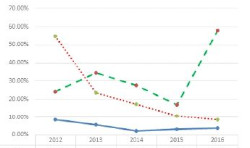
Results: Out of the total of 559,113 individuals tested over a period of 5 years, 39,784 (7.1%) tested positive. There was a yearly increase in number of individuals tested for HIV, but a progressive decline in HIV seropositive rate from 12.9% in 2012 to 4.0% in 2016. Females were disproportionately more infected than males while individuals in the 25-49 age-groups had the highest HIV positive rate compared to other age groups. The prevalence of HIV among individuals with Sexually Transmitted Infections was higher than in the general population through all the years studied.
Conclusion: There was yearly increase in the uptake of HCT services in the State. Females were disproportionately more infected than males though there was a consistent decline in seropositivity rate over the years. Measures to maintain HCT preventive activities are encouraged and should be expanded.
Downloads
References
1. NACA. Nigeria GARPR 2015. [Internet]. 2016. Available from: http://www.unaids.org/sites/default/les/country/documents/GA_narrative_report_2015.pdf)
2. U N A I D S . P r e v e n t i o n G a p R e p o r t [Internet]. Available from: http://www.unaids.org/sites/default/les/media_asset/2016-prevention-gap-report_en.pdf)
3. Dilernia DA, Mónaco DC, Krolewieck IA, César C, Cahn P, Salomón H. The importance of early diagnosis for the survival of HIV positive patients. Med (Buenos Aires) 2010; 70(5):453–6.
4. May MT. Better to know: the importance of early HIV diagnosis. Lancet Public Health . 2017; 2(1):e6-e7. Doi 10.1016/ 2468-2667(16)30038-X 5. Marks G, Crepaz N, Janssen RS.
5.Estimating sexual transmission of HIV from persons aware and unaware that they are infected with the virus in the USA. AIDS 2006; 26(10):1447–50.
6. National Population Commission, ICF International. Nigeria Demographic and Health Survey 2013.National guideline HCT. Abuja, Nigeria and Rockville, Maryland, USA; 2014.
7. WHO. Rapid HIV Tests: Guidelines For Use in HIV Testing and Counselling Services in Resource-Constrained Settings. [Internet]. 2004. Available from: http:// www.who. int/hiv/pub/vct/en/Rapid Test Guide - FINAL.pdf)
8. Federal Ministry of Health. NationalGuidelines for HIV Counselling and Testing. [Internet]. 2011.Availablefrom: https:// dsfree.usaid.gov/sites/default /les/hts_policy_nigeria.pdf)
9. Ujiji OA, Rubenson B, Ilako F, Marrone G, Wamalwa D, Wangalwa G. 'Opt-Out HIV Testing'' a real option among pregnant women in rural districts in Kenya? 11:151.' BMC Public Health. 2011;(11):151.
10. Taiwo MO, Osezua C. Acceptance and Uptake of HIV Counseling and Testing by Youth Corp Members in Osun state, Nigeria. Int JAsian Soc Sci. 2013;3(6) :1381–8.
11. UNAIDS. Voluntary Counselling and Testing. UNAIDS Technical Update. Geneva; 2000.
12. NACA. End of Term Desk Review Reportof the 2010-2015 National HIV/AIDS Strategic Plan [Internet]. 2015. Available from:http:// naca.gov.ng/ wordpress/ wp-content/ uploads/ 2016/11/NSP-2010-2015-end-term-desk-review-report_0.pdf)
13. ABIASACA. Abia State Strategic Plan 2010-2015. Umuahia; 2010.
14. Dellar RC, Dlamini S, Karim AQ. Adolescent girls and youngwomen: key populations for HIV Epidemic control. J Int AIDS Soc. 015; 18(2Suppl 1):19408.
15. UNAIDS. Miles to go: global AIDS update 2018. [Available from:www. unaids. org/en/resources/documents/global- aids- pdate.Accessed on 20/06/20]
16. Federal Ministry of Health. National HIV & AIDS and Reproductive Health Survey, 2012 (NARHS Plus). Abuja; 2013. 17. Mabala R.From HIV prevention to protection: Addressing the vulnerability of girls and young women in urban areas. Environ urban. 2006, 18(2)2: 407-432
18. Okonkwo KC, Reich K, Alabi IA, Umuike NA, Nachman AS. An evaluation of awareness, attitudes and beliefs of pregnant womentowards voluntary counseling and testing for HIV. AIDS Patient Care STDS. 2007; 21(4):252-60
19. McClelland RS, Lingappa RJ, Kinuthia J, John-steward CG, Jaoko W, Richardson AB, et al. Evaluation of the association between the concentrations of key vaginal bacteria and the increased risk of HIV acquisition in African women from ve cohorts: a nested case-control study. Lancet Infect Dis. 2018; 18(5): 554-564
20. Girls Not Brides (201 5) 'Ending child Pioneer Medical Journal Vol. 5, No. 8, JANUARY - JUNE, 2020 marriage in Africa: A brief by Girls Not Brides'
21. UNAIDS. Transactional sex and HIV risk:from analysis to action. 201 8. [Available from: www. unaids.org /en/ resouces/ ocuments/2018/transactional-sex- and-hiv-risk.Accessed on 20/06/20]
22. UNAIDS. Women and HIV — A spotlighton adolescent girls and young women. 201 9. [Available from: www.unaids. org/en/ resouces/ documents/ 2019/ women-and-hiv. Accessed on 20/06/20]
23. Podlekareva DN, Panteleev AM, Grint D,Post AF, Miro MJ, Bruyand M, et al. Short- and Long-term mortality and causes of death in HIV/tuberculosis patients in Europe. Eur Respir J. 2014; 43(1): 166-77
24. N AC A. In t e g r a t e d Bi ol og i ca l a n d Behavioral Surveillance Survey [Internet]. 2014. Available from: http:// naca. gov. ng/wordpress/wp-content/ uploads/2016/11/Final-Nigeria-IBBSS-2014- report.pdf)
25. UNAIDS. The Gap Report [Internet]. 2014. Available from: http://www. unaids.org/en/resources/campaigns/ 2014/2014gapreport/apreport)
26. Maiyaki MB. Incidence of tuberculosis nd immunological prole of TB/HIV co- infected patients in Nigeria. Ann Thorac Med.015;10(3):185–92.
27. Rie A V, Westreich D, Sanne I. (2011). Tuberculosis in patients receiving antiretroviral treatment: incidence, risk factors and prevention strategies. Journal of Acquired Immune Deciency Syndromes,. 56(4):349–55.
28. Miranda A, Morgan M, Jamal L, Laserson K, Barreira D, Silva G. Impact of Antiretroviral Therapy on the Incidence of Tuberculosis: The Brazilian Experience, 1995–2001. PLoS One. 2007;2(9):e826.
29. Abiodun MO, Ijaiya MA, Aboyeji PA. Awareness and knowledge of mother-to-child transmission of HIV among
pregnant women. J Natl Med Assoc. 2007;99(7):758-763.
30. Ward H, Rönn M. Contribution of sexually transmitted infections to the sexual transmission of HIV. Current Opinion in HIV and AIDS . 201 0 Jul;5(4):305-1 0.
Downloads
Published
Issue
Section
License
Published articles are distributed under the Creative Commons Attribution 4.0 International (CC BY 4.0) licence, unless otherwise stated.