MALIGNANCY TRENDS AND HISTOPATHOLOGICAL PATTERNS IN SOUTHEASTERN NIGERIA: A 7-YEAR REVIEW OF 1,680 SURGICAL SPECIMENS
Formerly Published in Vol 14 No. 4 Jan. – Jun., 2026
Keywords:
Histopathology, surgical pathology, malignancy rates, cancer detection, organ specific patterns, Nigeria, Southeast Nigeria, Abia StateAbstract
Background: Histopathological examination remains the gold standard for definitive diagnosis of tissue lesions and plays a crucial role in cancer detection and management. Understanding patterns of surgical pathology submissions and malignancy rates is essential for resource allocation, quality assurance, and epidemiological surveillance in resource-limited settings.
Objective: This study aimed to analyze the spectrum, distribution, and malignancy patterns of surgical pathology specimens submitted to Federal Medical Centre, Umuahia over a seven-year period (2016-2022), evaluate organ-specific malignancy rates, and determine demographic associations with histopathological diagnoses.
Methods: A retrospective descriptive study was conducted analyzing 1,680 histopathology reports from January 2016 to December 2022. Data extracted included patient demographics (age, sex), specimen type, organ system, and histopathological diagnosis. Specimens were categorized by organ system and diagnoses classified as benign, premalignant/atypical, malignant, inflammatory/infectious, or inadequate. Statistical analysis included descriptive statistics, chi-square tests, independent t-tests, one-way ANOVA, and Pearson correlation for temporal trends. Malignancy rates were calculated using adequate specimens only (excluding the 8 inadequate specimens from the denominator); unclassified/other specimens were retained in the denominator as they represented diagnostically evaluable tissue.
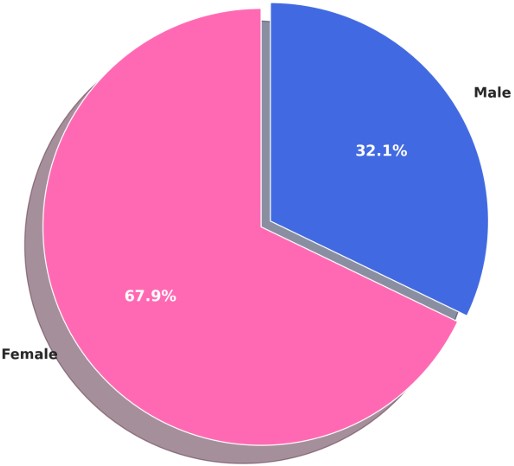
Results: The study analyzed 1,680 surgical pathology specimens with a mean patient age of 39.78 ± 20.47 years (range: 1-98 years). Females constituted 67.9% with a female-to-male ratio Pioneer Medical Journal Vol 14. No 2. Jan – Jun. 2026 1 Jegede et al., Malignancy trends of 2.12:1. The most common organ systems were breast (20.4%), uterus (10.6%), and prostate (9.6%). The overall malignancy rate was 24.8% (415/1,672 adequate specimens). Organ specific malignancy rates varied significantly: cervix (63.6%), prostate (39.8%), breast (36.7%), gastrointestinal tract (30.7%), and uterus (5.6%). Mean age for malignant diagnoses (53.98 ± 17.62 years) was significantly higher than for benign diagnoses (33.12 ± 19.51 years, p<0.0001). Sex was not a significant predictor of malignancy (p>0.05). A declining trend in malignancy rates was observed from 31.4% in 2016 to 12.2% in 2022 (r=-0.622, p=0.136).
Conclusion: This seven-year retrospective study demonstrates a substantial malignancy detection rate of 24.8% in surgical pathology specimens with marked organ-specific variation. The exceptionally high cervical cancer rate (63.6%) underscores the urgent need for enhanced cervical screening programs, particularly through integration of VIA/VILI within the Federal Medical Centre Umuahia General Outpatient Department. The 20-year age gap between benign and malignant diagnoses supports the implementation of age-stratified screening protocols in resource-limited settings. The study provides crucial baseline data for quality assurance and cancer surveillance in southeastern Nigeria.
Downloads
References
1. Ferlay J, Colombet M, Soerjomataram I, et al. Cancer statistics for the year 2020: An overview. Int J Cancer. 2021;149(4):778-789.
2. Jedy-Agba E, McCormack V, Adebamowo C, et al. Stage at diagnosis of breast cancer in sub-Saharan Africa: a systematic review and meta-analysis. Lancet Glob Health. 2016;4(12):e923-e935.
3. Anorlu RI. Cervical cancer: the sub-Saharan African perspective. Reprod Health Matters. 2008;16(32):41-49.
4. Adesunkanmi ARK, Lawal OO, Adelusola KA, Durosimi MA. The severity, outcome and challenges of breast cancer in Nigeria. Breast. 2006;15(3):399-409.
5. Ogunbiyi JO, Shittu OB. Increased incidence of prostate cancer in Nigerians. J Natl Med Assoc. 1999;91(3):159-164.
6. Abdulkareem FB. Epidemiology and incidence of common cancers in Nigeria. Cancer Registry, University College Hospital, Ibadan. 2009.
7. Mandong BM, Ngbea JA, Tanko MN, Echejoh GO. Pattern of histopathological diagnosis in a Nigerian tertiary hospital. Niger J Med. 2011;20(2):204-209.
8. Atanda AT, Atanda OA. Surgical pathology specimens in a Nigerian teaching hospital: an audit. Ann Ib Postgrad Med. 2012;10(2):24-29. 9. Ohene-Yeboah M, Adjei E. Breast cancer in Kumasi, Ghana. Ghana Med J. 2012;46(1):8 13. 10. Irabor DO, Oludara MA. Pattern of malignant tumours seen at the Lagos University Teaching Hospital (1992-2007). J Clin Pract. 2012;15(1):373-380.
11. Torre LA, Bray F, Siegel RL, Ferlay J, Lortet-Tieulent J, Jemal A. Global cancer statistics, 2012. CA Cancer J Clin. 2015;65(2):87-108.
12. Somdatta P, Baridalyne N. Awareness of breast cancer in women of an urban resettlement colony. Indian J Cancer. 2008;45(4):149-153.
13. Sung H, Ferlay J, Siegel RL, et al. Global cancer statistics 2020: GLOBOCAN estimates of incidence and mortality worldwide for 36 cancers in 185 countries. CA Cancer J Clin. 2021;71(3):209-249.
14. Jedy-Agba E, Curado MP, Ogunbiyi O, et al. Cancer incidence in Nigeria: a report from population-based cancer registries. Cancer Epidemiol. 2012;36(5):e271-e278.
15. Omosun A, Abayomi A, Ogboye O, et al. Distribution of cancer and cancer screening and treatment services in Lagos: a 10-year review of hospital records. JCO Glob Oncol. 2022;8:e2200107.
16. Usman S, Musa BI, Musa BM, et al. Emerging cancer disease burden in a rural sub Saharan African population: northeast Nigeria in focus. Front Oncol. 2024;14:1380615.
17. Ezeome ER, Anarado AN. Cancer incidence in Nigeria: a tertiary hospital experience. Asian Pac J Cancer Care. 2020;5(1):335-340.
18. Nnadi DC, Singh S, Ahmed Y, et al. Histo-pathological features of genital tract malignancies as seen in a tertiary health centre in north-western Nigeria: a 10-year review. Ann Med Health Sci Res. 2014;4(2):213-217.
19. Adejumo PO, Aniagwu T, Oladimeji O, et al. Pattern of gynaecological malignancies at a university teaching hospital in southwest Nigeria: a 5-year review. Int J Gynaecol Obstet. 2022;159(1):230-237.
20. Tolani MA, Fidelis L, Oyelowo N, et al. Impact of the COVID-19 pandemic on surgical practice, training, and research in Nigeria. Pan Afr Med J. 2021;39:59.
21. Nnaji CA, Moodley J. Impact of the COVID-19 pandemic on cancer diagnosis, treatment and research in African health systems: a review of current evidence and contextual perspectives. Ecancermedicalscience. 2021;15:1170.
22. Pace LE, Shulman LN. Breast cancer in sub-Saharan Africa: challenges and opportunities to reduce mortality. Oncologist. 2016;21(6):739-744.
23. Foulkes WD, Stefansson IM, Chappuis PO, et al. Triple-negative breast cancer in African American women: disparities versus biology. Nat Rev Cancer. 2017;17(1):21-38.
24. Lott A, Bhatt M, Okpechi SC, et al. Triple-negative breast cancer prevalence in Africa: a systematic review and meta-analysis. BMJ Open. 2022;12(6):e057435.
25. Mbulawa ZZA, Temmerman M, Broeck DV, et al. Performance of alternative strategies for primary cervical cancer screening in sub-Saharan Africa: systematic review and meta analysis of diagnostic test accuracy studies. BMJ. 2015;351:h3936.